
Is the U.S. Housing Market Finally On the Mend?

Editorial Staff
Content published by Hemlane is created and reviewed by members of our editorial team, including experienced technical writers and real estate professionals.
Property Management Pulse
Pending home sales increased by 9.6% year over year, marking the largest jump since September 2022. This, combined with the shrinking buyer-seller gap, indicates that the housing market may finally be coming out of the danger zone.
A Redfin analysis found that 6 of the 10 most popular neighborhoods among buyers and sellers alike are located in the Midwest. These localities offer the perfect balance of affordability, space, and proximity to big-city amenities. People’s preferences for areas adjacent to big cities make even more sense in light of Redfin’s survey which found that 44% of Americans would give up more space if it meant living in a home with more natural sunlight.
Buying a newly constructed home undoubtedly commands a higher price tag than an old home. But, Realtor.com’s data has found that newer homes might end up saving you more money over the years, dispelling a long-held assumption.
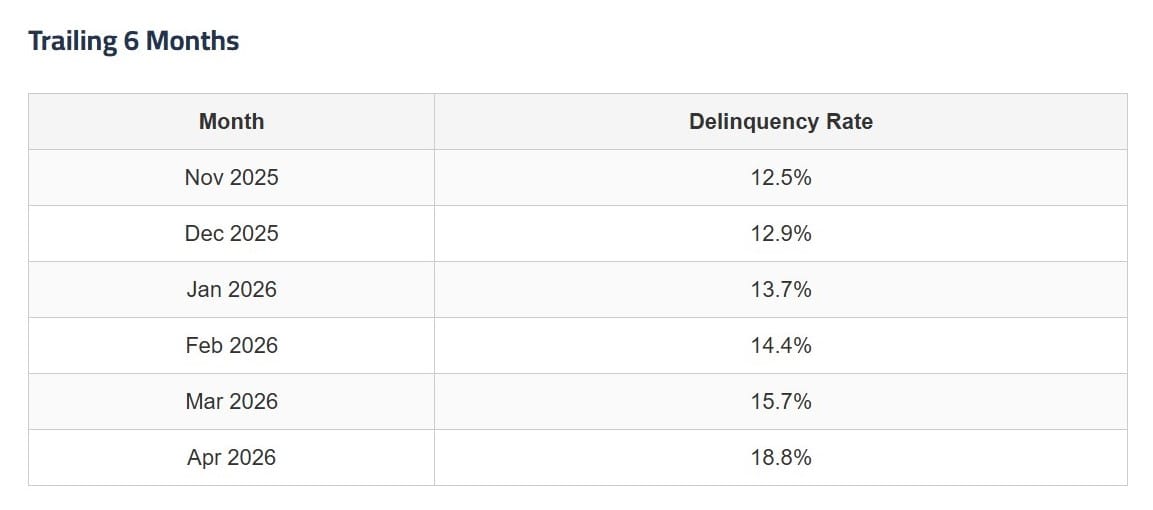
As for the rental market, Hemlane’s report found that rents held flat, while the median days on market slightly inched up in April when compared to March. Rent delinquencies, on the other hand, went from 15.7% to 18.8%, marking the largest increase in the last six months.
Hemlane Brief
- 6.36%: Average 30-Year Fixed-Rate Mortgage
- 2.8%: Inflation Rate
- 0.6%: Change in Rent MoM
Is the Buyer-Seller Gap Finally Shrinking?
For months, the U.S. housing market has strongly favored homebuyers, giving them more negotiating power, but the tide may be starting to shift. According to Redfin, the number of homes that went under contract increased by 9.6% year over year, marking the highest level rise since September 2022. All major metro cities saw a jump in pending home sales, with the exception of Houston, Detroit, and Seattle.
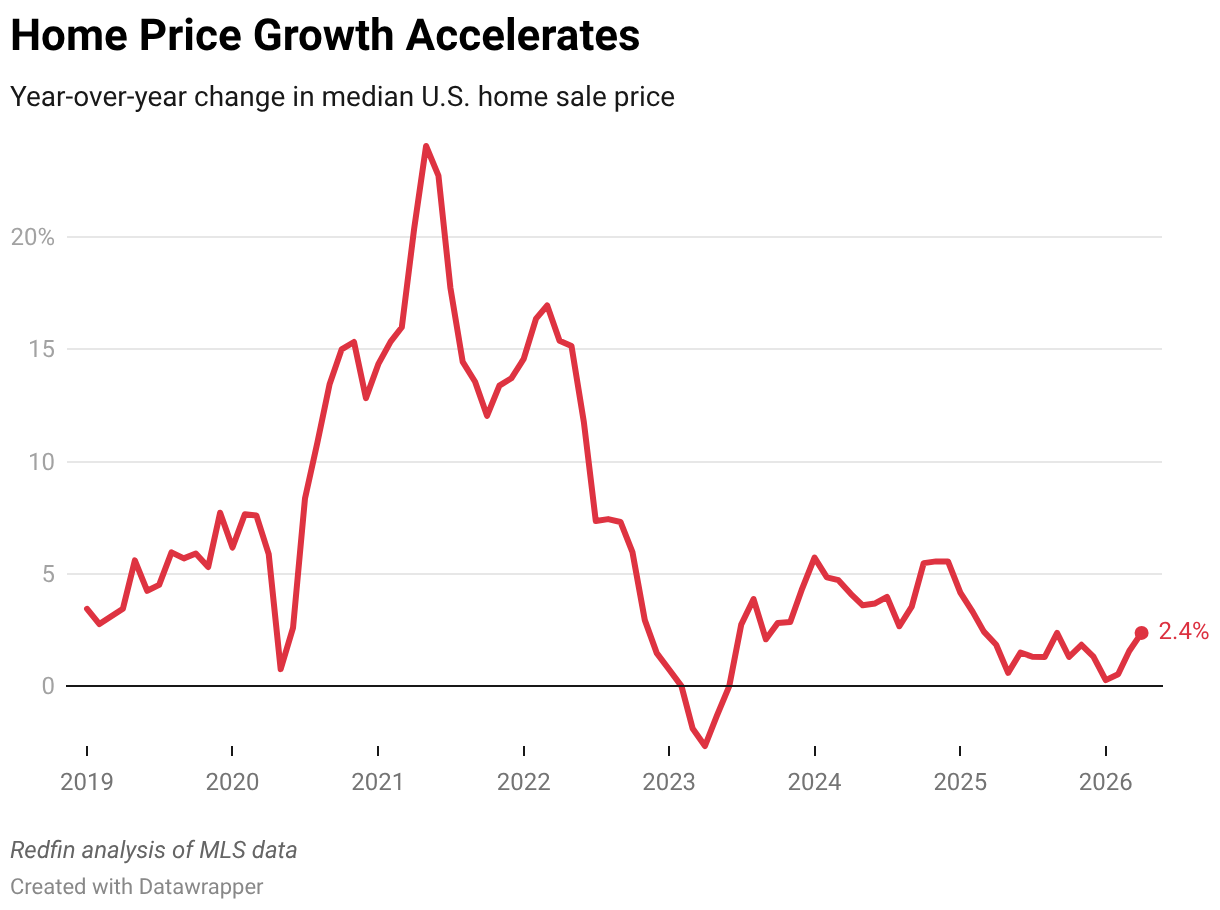
In keeping with this upward trend, mortgage applications also spiked by 4% week over week for the week ending on May 14. Median home sale prices also inched up by 2.4% year over year in April to $396,173, making it the largest gain since March of last year.
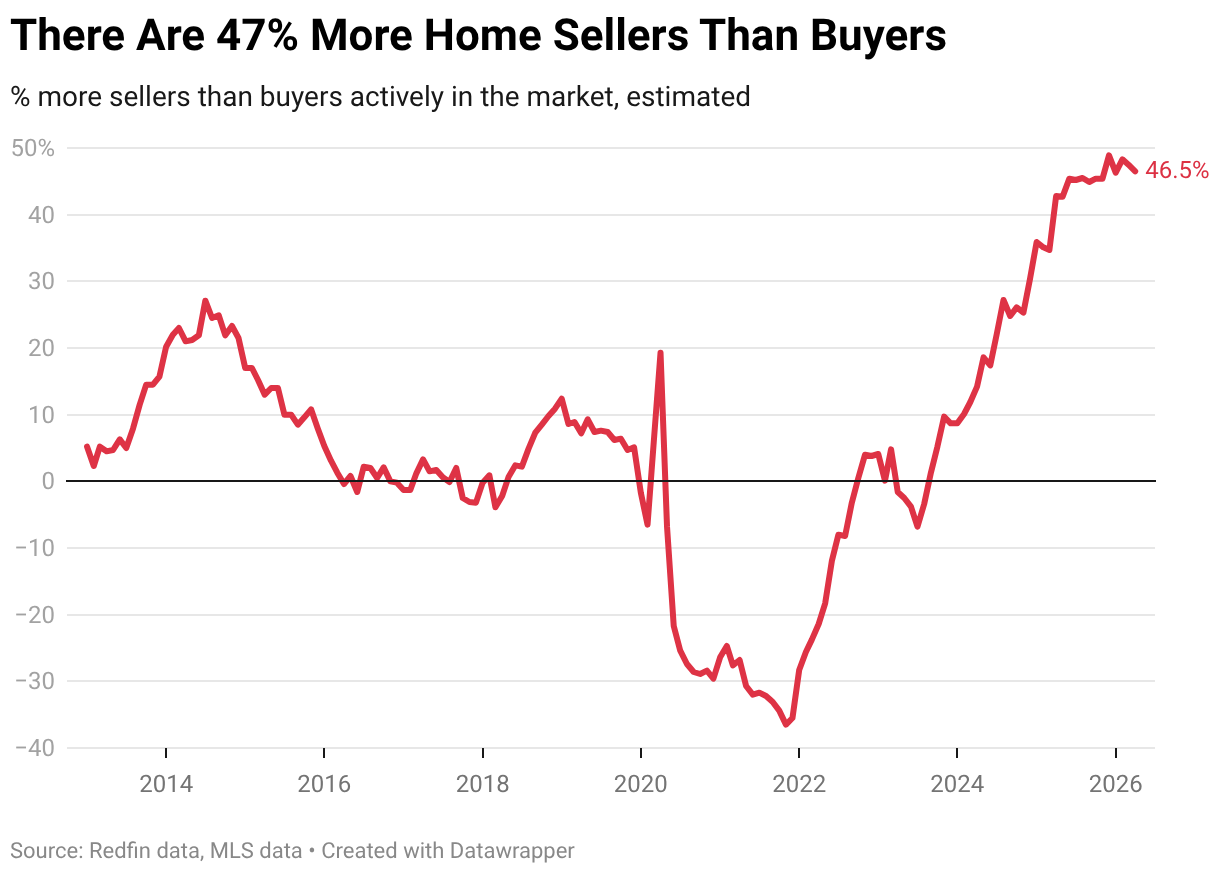
With more homebuyers coming out of the woodwork, the signs all point to a stabilizing real estate market. While the end of last year saw sellers outnumber buyers by nearly 49%, this gap has slowly been shrinking. In March, it had come down to 47.5%, and slid further down to 46.5% in April.
While aspiring homebuyers are showing more interest than before, it’s only part of the picture. As Realtor.com found out, a lot of would-be sellers and buyers are still stalling, primarily because of how uncertain the economy is right now. At the end of April, consumer confidence fell to an all-time low.
Jake Krimmel, senior economist at Realtor.com, describes this as a resilient market; one where things are not necessarily good, but also aren’t as bad as they could be. Though the market is certainly improving, we must guard our expectations and wait.
6/10 Hottest Neighborhoods are Located in Midwest Suburbs
A Redfin analysis ranked the popularity of U.S. cities among homebuyers by analyzing the growth in listings year over year, combined with the ease of winning a home. Surprisingly, the Midwest suburbs dominated this list, making up 6 out of the top 10 hottest neighborhoods.
The reason? These areas offer the perfect blend of affordability and ease of access to the best schools, jobs, dining and shopping spots, and other amenities. As Asad Khan, Redfin senior economist puts it: “Many of these neighborhoods sit just outside major hubs like Milwaukee, Chicago and Tampa, hitting a sweet spot: lower cost of living without giving up access to highly rated schools, shopping and dining. They have the convenience of big cities without the big-city price tags.”
Here are the most popular zip codes with their median sale price:
- Land O’ Lakes, Florida (34637): $425,000
- Plant City, Florida (33566): $320,000
- Oak Creek, Wisconsin (53154): $381,200
- Oceanside, New York (11572): $725,000
- West Bend, Wisconsin (53090): $350,000
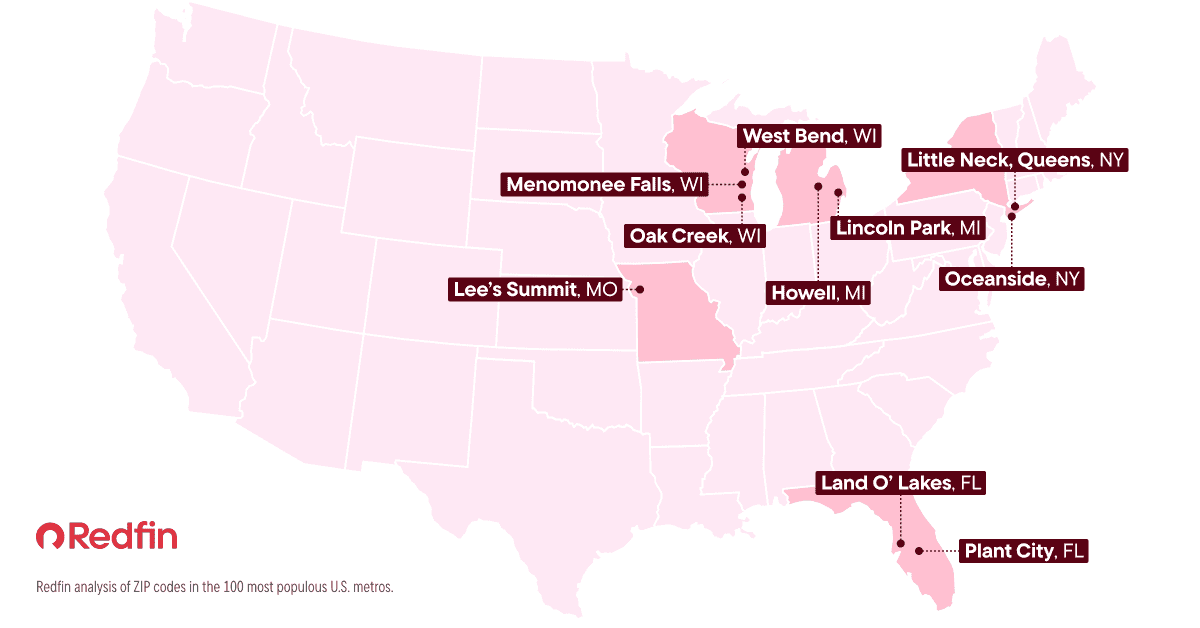
From the data, it’s clear that people want the space for a more laid-back lifestyle without straying too far from the hustle and bustle of the big cities.


U.S. Citizens Prefer Sunlit Homes (Even if They’re Smaller)
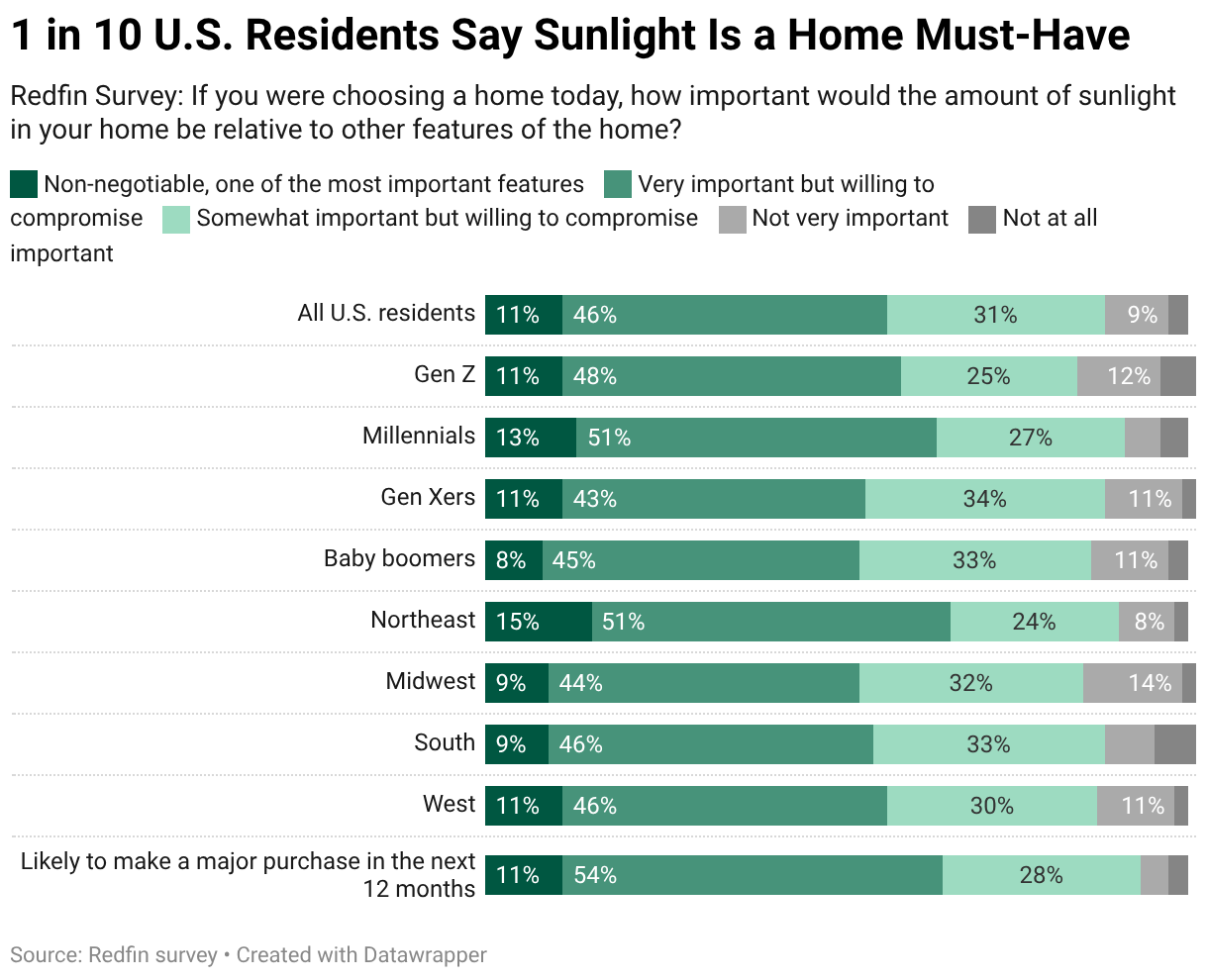
A Redfin survey conducted by Ipsos found that 44% of U.S. residents would rather live in homes that get a lot of natural sunlight even if they have to give up on square footage. On the other hand, only 24% of survey respondents said that they would take a larger home with less sunlight.
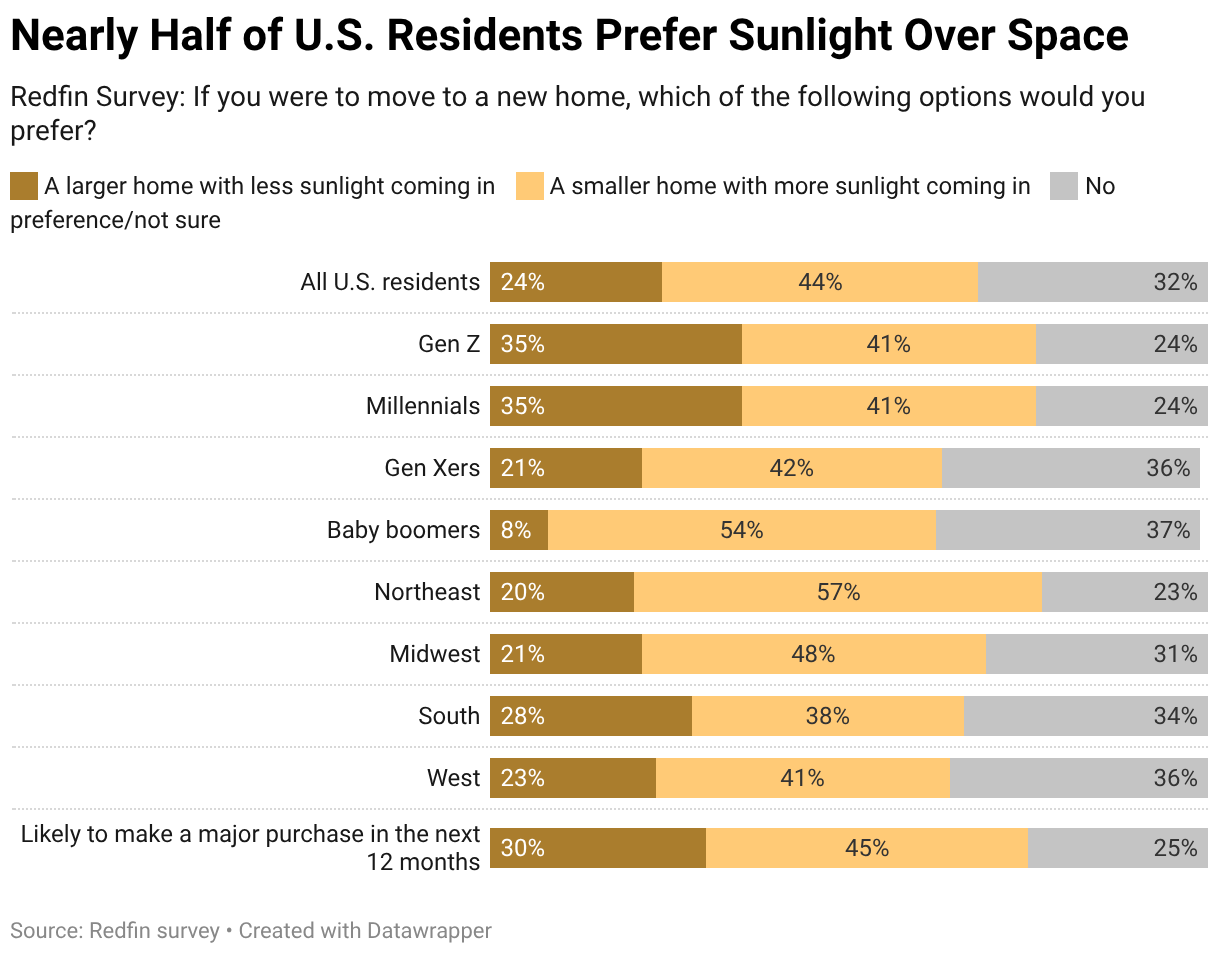
When analyzed according to region, 57% of residents living in the Northeast documented their preference for natural sunlight over space, followed by 48% of those in the Midwest. This isn’t surprising, considering that these regions house some of the cloudiest states.
Among different age groups, baby boomers make up the most (54%) of citizens who would give up extra space for more sunlight. While 41% of both millennials and Gen Zers would prioritize sunlight, 35% of them would rather have the space. According to Tim Harper, a Florida-based real estate agent, this is because the younger generations are planning for the future; for “a property’s potential for multigenerational living,” because they might have kids soon, or want their elderly parents to move in.
While 88% of Americans consider sunlight to be important in choosing their next home, only 11% think of it as non-negotiable. The others claimed that they would be willing to compromise on natural light.
Why does sunlight play such a deciding role in choosing a home? Here are the reasons that Americans cited:
- Sunlight improves their mood and mental well-being (53%)
- It reduces energy costs (16%)
- They like the looks and aesthetics of sunny spaces (14%)
Even when it comes to their current living situations, 69% of U.S. residents say that the amount of sunlight their homes get directly influences how satisfied they feel.
Newer Homes are More Expensive, But Maybe Not in the Long Run
If you want to buy a newly constructed home as opposed to an existing one, you should be prepared for a heftier price tag. This is especially true in urban areas where existing homes outnumber newly constructed homes three to one.
In urban areas, new homes are 78.4% more expensive than existing homes, found Realtor.com’s New Construction Insights Analysis. In absolute numbers, the median sale price of an existing home is $414,000, while a newly built one commands $738,000.
This gap is the widest in Miami, with new homes costing 300%+ more than old homes. Coming in second, a few Florida metros see a premium of 200% on newly constructed homes. The main reason for this is the higher demand and shortage of supply in metro cities.
While these newer homes are initially more expensive, Realtor.com’s analysis suggests that they may actually end up saving you money in the long run. How? Older homes often come up with older HVAC systems, inefficient insulation, and a plethora of other maintenance problems, all of which can quickly add up.
Newer homes don’t have these problems, so you end up saving $25,335 in utility and maintenance bills over 10 years, found the report. Considering the fact that energy and utility bills are rising exponentially, energy-efficient new homes may be worth the initial investment.
Hemlane’s April 2026 Rental Market Report
As found in Hemlane’s report, April marked a strong upward trajectory in listing activity and tenant demand. Median rents remained steady at $1,800 when compared to March. However, the number of days a rental unit spends on the market before it’s rented out increased to 24 days, which is up from the 22 days of March.
Here’s a breakdown of the average and median rents according to bedroom type:
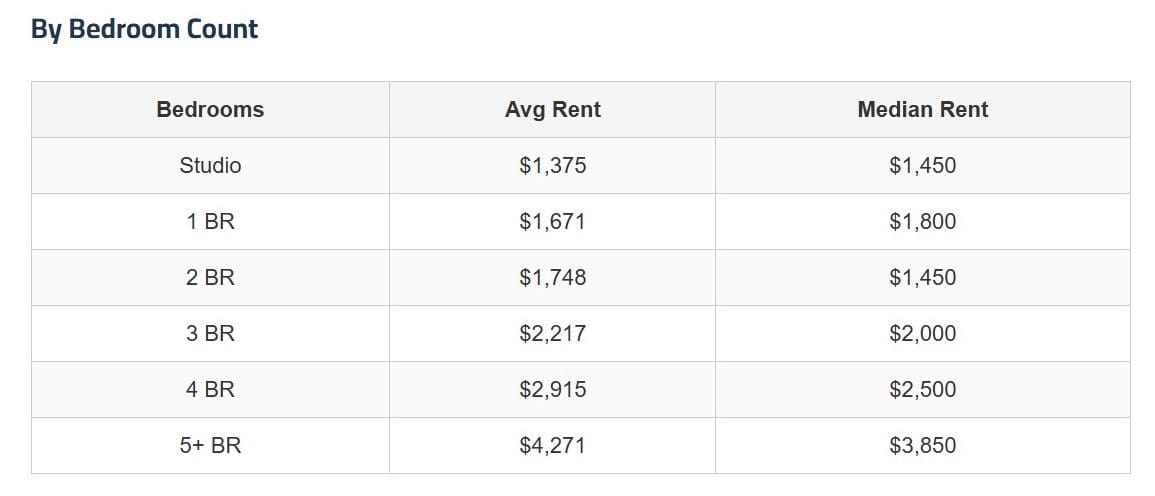
Studio bedrooms saw the largest rise in median rent from last month, going from $1,338 to $1,450.
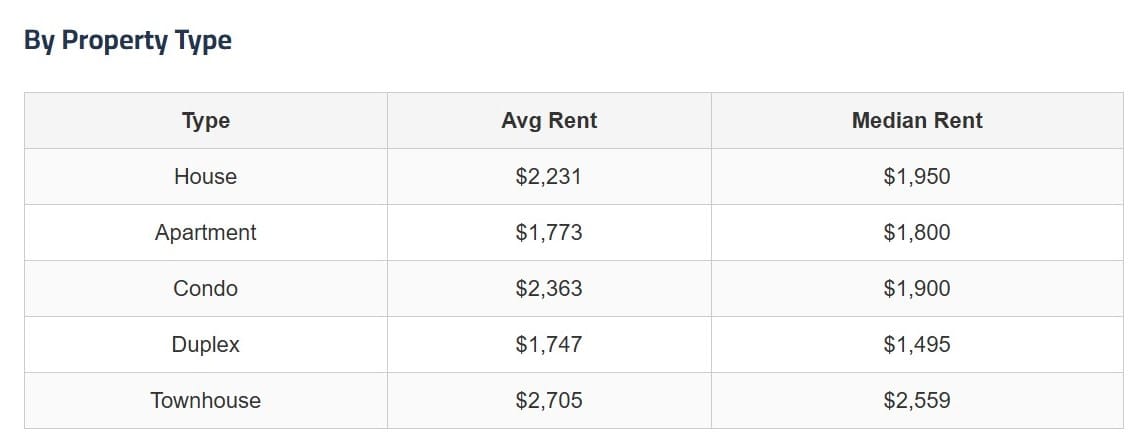
When it came to property types, townhouses were the most expensive to rent at $2,559.
One of the biggest changes in the April rental market, though, was the uptick in rent delinquencies. 18.8% of April rent payments were not paid in full, compared to the 15.7% last month. In fact, the rental delinquency rate has steadily increased for the last six months.


Here are the cities with the highest delinquencies:
- Pittsburgh, PA: 46%
- Cleveland, OH: 43.1%
- Memphis, TN: 40.9%
- Cincinnati, OH: 38.2%
- Amarillo, TX: 35.2%
If you’re a landlord with properties in a higher-delinquency market, you can reduce your risk by enforcing stricter tenant screening policies and late fees. For those who rely primarily on rental income, it might be a good idea to build up your cash reserves to absorb any missed or late payments.
Get the Latest in Real Estate & Property Management!
I consent to receiving news, emails, and related marketing communications. I have read and agree with the privacy policy.


