South Carolina Tenant-Landlord Rental Laws & Rights for 2026

Overview of South Carolina Landlord-Tenant Laws
South Carolina’s rental housing rules are primarily based on the South Carolina Residential Landlord and Tenant Act (SCRLTA) codified at S.C. Code Ann. § § 27-40-10 through 27-40-940. The Act lays the groundwork for how landlords and tenants must operate by covering habitability, evictions, notices, security deposits, repairs and more.
For landlords using modern property management platforms such as Hemlane understanding specific state requirements is key to staying compliant and avoiding costly disputes. Below is a practical experience based on the overview of the most important parts of South Carolina rental law written for both housing providers and renters.
Sources included throughout.
- Overview of South Carolina Landlord-Tenant Law
The SCRLTA is the central authority governing residential rentals. Full text:
https://www.scstatehouse.gov/code/t27c040.php
The Act regulates:
Security deposits and lawful deductions
When and how notices must be served
Required property maintenance standards
Habitability and repair obligations
Fair housing requirements
Legal eviction processes
Restrictions on landlord entry
Tenant responsibilities
Unlike some states South Carolina’s statute was drafted to balance the obligations of landlords and tenants rather than take a strongly tenant-leaning or landlord-leaning approach. Courts in South Carolina generally expect both sides to follow written agreements closely since lease documents carry significant weight.
- Tenant Rights and Responsibilities in South Carolina
Core Tenant Rights
Tenants in South Carolina are legally entitled to-
- A habitable dwelling
The rental must comply with basic housing and building codes like functioning heat, plumbing, electric systems, weatherproofing and no conditions that affect health or safety.
(S.C. Code Ann. § 27-40-440) - Privacy and peaceful enjoyment
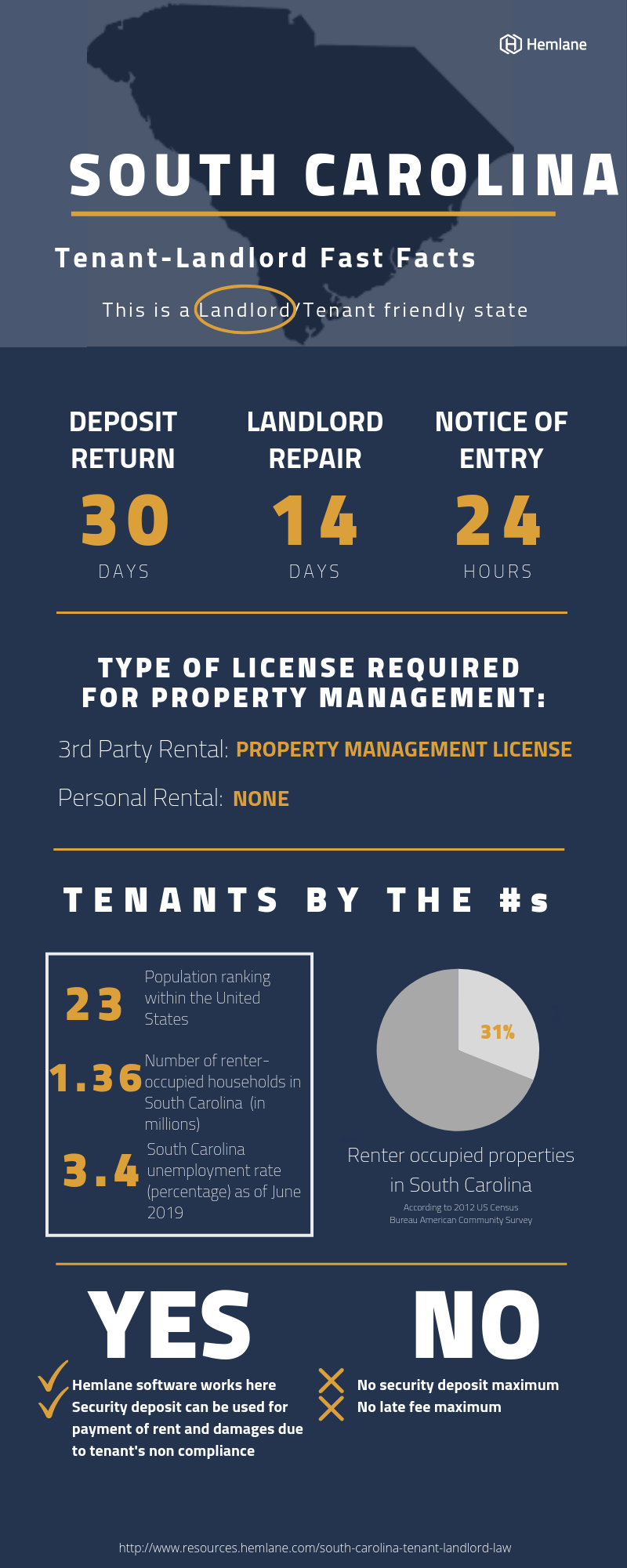
Landlords cannot enter at will. Except for emergencies, reasonable notice commonly interpreted as 24 hours is required.
(S.C. Code Ann. § 27-40-530) - Fair housing protections
Discrimination based on protected characteristics is prohibited under federal and state law.
HUD Fair Housing https://www.hud.gov/program_offices/fair_housing_equal_opp
South Carolina Human Affairs Commission https://schac.sc.gov
Tenant Responsibilities
Tenants must:
Pay rent on time as agreed
Keep the unit reasonably clean
Use plumbing, appliances and electrical systems properly
Avoid deliberate property damage
Follow reasonable community rules
Report repairs on time preferably in writing
This aligns with the SCRLTA expectation that tenants maintain basic sanitation and avoid creating hazardous conditions.
- Landlord rights and responsibilities
- Provide and maintain a habitable property
Landlords must comply with S.C. Code Ann. § 27-40-440, which requires them to:
Keep all structural components (roof, walls and floors) in good repair
Ensure working heat, plumbing, water and electricity
Maintain common areas safely
Provide garbage receptacles if applicable
Make necessary repairs within reasonable timeframes
- Make timely repairs
Under § 27-40-630 landlords must address non-emergency repair requests within 14 days once notified in writing.
Emergency issues involving health or safety like sewage backups, no heat in winter, major leaks must be handled promptly typically within 24 hours.
- Allow tenant peaceful possession
As long as the tenant pays rent and follows the lease the landlord may not interfere with the tenant’s use of the property. Harassment or unnecessary entry can expose landlords to legal claims.
- Follow Lawful Eviction Procedures
Self-help evictions (changing locks, removing doors and shutting off utilities) are illegal under South Carolina law.
Evictions must proceed through Magistrate's Court.
Court resources: https://www.sccourts.org
- Repairs and Maintenance Responsibilities
A recurring pain point in rental housing especially for owners managing multiple properties is determining who handles what.
Landlord Obligations
Electrical, plumbing, HVAC and sanitation systems are in safe working order
Roof, walls, stairs, windows and structural components are maintained
Common areas free of hazards
(S.C. Code Ann. § 27-40-440)
Tenant Obligations
Keep the home clean and sanitary
Use all systems and appliances properly
Report issues promptly to prevent worsening damage
Not block vents, break windows or overload electrical systems
Not cause damage beyond normal wear and tear
(S.C. Code Ann. § 27-40-510)
Remedies When Repairs Aren’t Made
If the landlord fails to make required repairs:
Tenants may terminate the lease if habitability is substantially affected
Tenants may request damages in court
Tenants may seek code enforcement inspections
Many cities and counties have housing inspectors; for example:
Charleston County Building Inspections: https://www.charlestoncounty.org/departments/building-inspection/


Note: South Carolina does not allow tenants to unilaterally repair and deduct costs unless the landlord agrees in writing.
- South Carolina Security Deposit Rules
South Carolina has no cap on security deposit amounts but they must be “reasonable.”
(S.C. Code Ann. § 27-40-410)
Allowed Deductions
Unpaid rent
Excessive cleaning
Tenant-caused damage
Unpaid utilities (if tenant’s responsibility)
Normal wear and tear cannot be deducted.
Return Deadline
Landlords must return the deposit plus an itemized deduction list within 30 days of the tenant vacating.
If not returned within 30 days landlords may owe up to three times the wrongfully withheld amount plus attorney’s fees.
(S.C. Code Ann. § 27-40-410(C))
- Eviction Process in South Carolina
Evictions must go through court—no shortcuts.
Steps in the Process
Serve proper notice
For unpaid rent: 5-day notice unless the lease specifies otherwise
For other lease violations: 14 days
For month-to-month termination: 30 days
File an application for ejectment with the Magistrate's Court.
Tenant receives summons and complaint.
A hearing is scheduled for both parties to present evidence.
If the judge rules for the landlord a Writ of Ejectment may be issued.
The sheriff performs the physical removal if necessary.
Eviction information:
https://www.sccourts.org/selfhelp/summaryCourt/evictionProcess.cfm
- Rent Increases and Rent Control
South Carolina has no statewide rent control. Landlords may raise rent freely at lease renewal unless a local ordinance applies.
Some municipalities require written notice:
Columbia – 60-day notice for increases
Greenville County – 30–90 days depending on increase size
Charleston County – 60 day notice for increases over 7.9%
Mount Pleasant – limits annual increases on certain properties
Hilton Head Island – increases capped at the Consumer Price Index
Local rules change periodically, so landlords should check current municipal codes or consult a real estate attorney.
- Landlord Entry and Tenant Privacy Rules
Under § 27-40-530 landlords may only enter for:
Repairs
Inspections
Showing the unit
Emergencies
Except for emergencies “reasonable notice” typically interpreted as 24 hours is required.
Tenants may pursue damages or injunctive relief if a landlord enters illegally.
- Fair Housing Laws in South Carolina
Tenants are protected under:
Federal Fair Housing Act (1968)
South Carolina Fair Housing Law enforced by the
South Carolina Human Affairs Commission (SCHAC): https://schac.sc.gov
HUD Fair Housing Enforcement: https://www.hud.gov/program_offices/fair_housing_equal_opp
Protected classes include:
Race, color, religion, national origin, sex, disability, familial status, age and marital status.
Violations can result in:
Civil penalties
Attorney fees
Damages to tenants
Court orders requiring compliance
- Anti-Retaliation Protections
South Carolina prohibits retaliation against tenants for:
Requesting repairs
Filing official complaints
Participating in tenant organizations
Asserting legal rights
Example retaliatory actions include raising rent, reducing services or filing an eviction within 6 months of the tenant exercising rights.
Source: S.C. Code Ann. § 27-40-910
- Helpful Resources for Landlords and Tenants
South Carolina Legal Services
Free legal assistance for qualifying tenants
https://sclegal.org
South Carolina Human Affairs Commission
Fair housing enforcement
https://schac.sc.gov
South Carolina State Housing Finance & Development Authority
Affordable housing programs and compliance
https://www.schousing.com
Local Tenant Unions & Advocacy Groups
Columbia Tenants Union
Charleston Tenant Union
Landlord Associations
South Carolina Apartment Association
https://www.scapartments.org
- Frequently Asked Questions
- What are the main tenant rights in South Carolina?
Tenants are entitled to habitable housing, privacy, and fair treatment under federal and state law. Landlords must provide basic services such as heat, water, and electricity.
- Can a landlord raise rent by any amount?
At the state level, yes—no rent caps. Some municipalities require advance notice or limit increases. Always check local ordinances.
- What are legal reasons for eviction?
Non-payment of rent
Lease violations
Staying past lease expiration
Illegal activities
Excessive property damage
All evictions must go through Magistrate Court.
- How much notice is required to end a month-to-month lease?
30 days written notice.
- What fees may landlords charge?
Security deposits
Late rent fees
Application/screening fees
Returned check fees
Fees must be disclosed and must reflect actual or reasonable costs.
- What can tenants do if essential repairs aren’t made?
Tenants may:
Request code enforcement
Seek monetary damages
Terminate the lease if habitability is compromised
File in Magistrate Court
South Carolina does not permit automatic “repair and deduct” without landlord approval.


Get the Latest in Real Estate & Property Management!
I consent to receiving news, emails, and related marketing communications. I have read and agree with the privacy policy.


