Ohio Tenant-Landlord Rental Laws & Rights for 2026

I am writing this from a Columbus coffee shop, taking a break from what would have been my fifth eviction court appearance this month except this one settled yesterday. The tenant, who was three months behind on rent, suddenly came up with $4,800 after I filed in Franklin County Municipal Court.
This scenario plays out constantly in Ohio. Landlords who do not understand Ohio Revised Code Chapter 5321 make expensive mistakes. Tenants who do not know their rights get taken advantage of. And everyone wastes time and money in court over issues that should have been prevented.
Since joining automated maintenance software Ohio operations in 2018, I've managed 175 rental units across Cleveland, Columbus, Cincinnati, and smaller markets like Dayton and Toledo. I've dealt with everything from frozen pipes in Cleveland winters to toxic mold disputes, from security deposit lawsuits to a discrimination claim.
This is not a legal treatise and I am not an attorney, consult one for legal advice. This is what actually happens when Ohio's landlord-tenant laws meet real-world rental situations.
The Foundation: Ohio Revised Code Chapter 5321
Ohio's landlord-tenant law is straightforward compared to states like California or New York. The entire statutory framework fits in one chapter of the Revised Code.
ORC § 5321.04 lays out landlord obligations. ORC § 5321.05 covers tenant obligations. ORC § 5321.16 governs security deposits. The rest addresses specific situations like retaliation, prohibited acts and remedies.
What makes Ohio interesting: there's significant flexibility. Unlike states with strict rent control, mandatory landlord insurance, or caps on security deposits, Ohio lets landlords and tenants negotiate most terms freely—as long as those terms don't violate Chapter 5321 or other laws.
Security Deposits: The 30-Day Rule That Trips Everyone Up
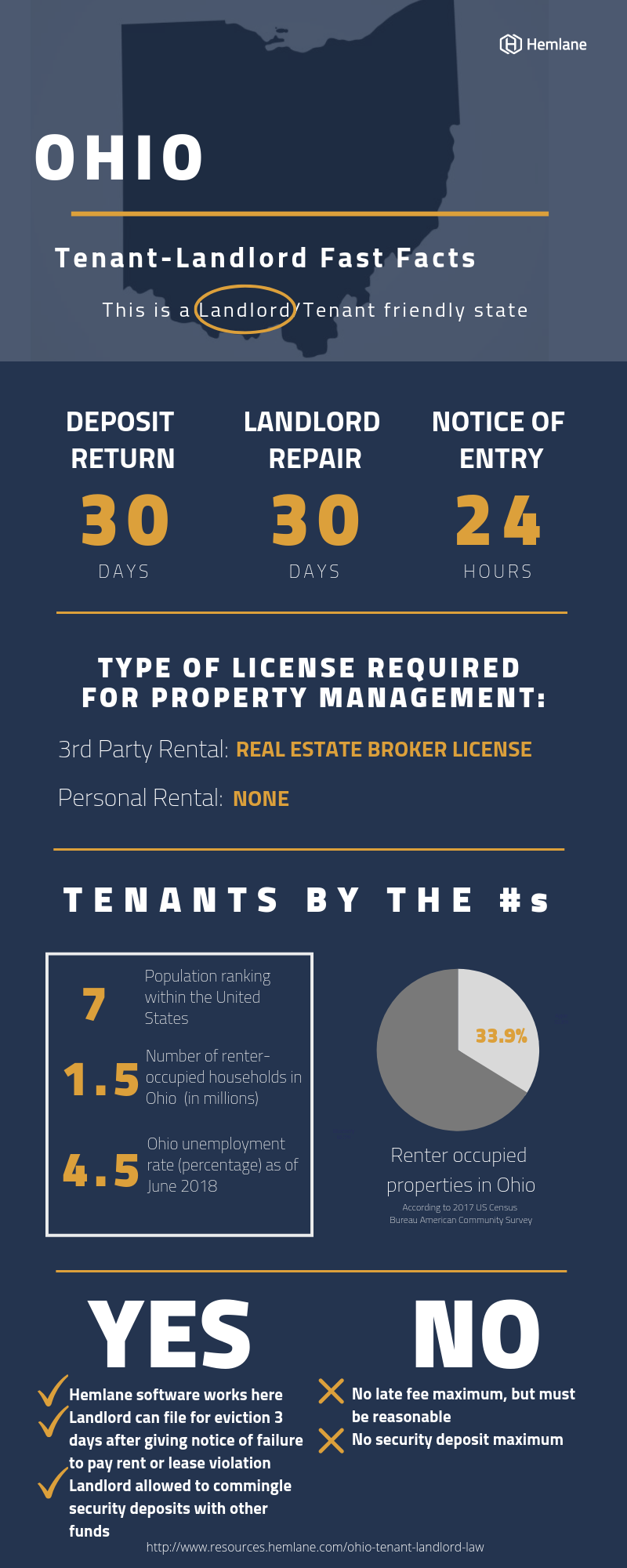
Under ORC § 5321.16, landlords must return security deposits within 30 days of the tenant moving out. Seems simple, right?
Here's where it gets complicated.
The Itemized Statement Requirement
If you're withholding any portion of the deposit, you must provide an itemized statement of damages with the partial refund. Miss this requirement, and according to legal guidance from Cleveland tenant rights attorneys, you could be liable for double damages plus attorney fees.
I learned this watching a Cincinnati landlord withhold $1,200 from a $1,500 deposit for legitimate damages—carpet replacement, wall repairs, cleaning. But he only sent the tenant $300 with a note saying "damages." No itemized list. No receipts.
The tenant sued. The judge awarded $2,400 which is double the amount wrongfully withheld plus $1,800 in attorney's fees. Total cost: $4,200 vs the $1,200 he had legitimately spent on repairs.
The fix? He should have sent:
"Security Deposit Return - Itemized Statement
Original Deposit: $1,500.00
Deductions: - Carpet replacement (pet stains, living room and bedroom): $780.00 (receipt attached) - Wall repair (holes from unapproved wall mounts): $240.00 (receipt attached)
- Deep cleaning (kitchen and bathroom): $180.00 (receipt attached). Total Deductions: $1,200.00. Amount Returned: $300.00."
The Address Problem
Here is something most landlords do not know: ORC § 5321.16 says that if the tenant does not provide a forwarding address, the landlord shall make a reasonable effort to find them.
What's "reasonable"? Courts have ruled that means more than just mailing to the old rental address. You need to check:
- Emergency contact information from the lease application
- Last known phone number and email
- Employment records if you have them
A Dayton landlord got burned on this. Tenant moved out without notice and left no forwarding address. The landlord kept the $900 deposit figuring "I tried to return it." Six months later the tenant sued. The landlord had to show proof of reasonable efforts to locate them which he could s=not and so he lost the case.
Normal Wear and Tear vs. Damage
This distinction causes more disputes than any other aspect of Ohio landlord-tenant law.
ORC § 5321.16(C) allows deductions for damages to the premises beyond normal wear and tear.
Normal wear and tear (cannot withhold deposit):
- Faded paint after 3+ years
- Worn carpet in high-traffic areas after 5+ years
- Minor scuffs and scratches on floors
- Worn linoleum or countertops from regular use
- Loose door handles or cabinet hinges from regular use
Damage (can withhold deposit):
- Holes in walls from removed wall mounts or fixtures
- Pet urine stains or persistent odors
- Burns, deep scratches or tears in carpet
- Broken windows, doors or appliances
- Excessive filth requiring professional cleaning
I use a simple test: Would this damage exist if the tenant had used the property reasonably? If yes, it's normal wear. If no, it's damage.
Through automated maintenance software, we document the property condition at move-in with timestamped photos. This has saved landlords countless times in disputes. Without photos proving the carpet was pristine at move-in, you cannot prove the tenant's dog caused those stains.
Landlord Entry and Tenant Privacy: The "Reasonable Notice" Gray Area
ORC § 5321.04(A)(8) requires landlords to give reasonable notice before entering except in emergencies.
What's "reasonable"? The statute doesn't specify. Through case law and common practice, Ohio courts generally interpret this as 24 hours' notice.
But here's the catch: the statute says "reasonable notice" and "reasonable times." Both matter.
What I've Learned Actually Works
Notice delivery: Text, email, or written notice work, but I always use multiple methods for important entries:
- Text message
- Written notice taped to door
Timing: "We are entering tomorrow at 10 am" rarely works. Better: "We need to inspect the furnace before winter. We would like to schedule entry for next Wednesday between 10 am and noon. Please confirm this works or suggest an alternative time."
This collaborative approach reduces conflicts dramatically. Through Hemlane, we send automated entry notices that give tenants 48-72 hours' notice and request confirmation.
When Things Go Wrong
ORC § 5321.04(B) gives tenants remedies if landlords violate entry rules. They can recover actual damages, get injunctive relief, and recover attorney fees.
A Cleveland landlord I know entered a unit five times in two weeks "to check on repairs." Each time he gave less than 12 hours' notice. The tenant sued for harassment. The judge ruled the repeated entries violated the statute awarded $1,200 in damages plus attorney fees.
The landlord's mistake? He had legitimate reasons like coordinating multiple contractors but he did not communicate properly or space out the visits reasonably.
Eviction Process: Where Most Landlords Mess Up
Ohio's eviction process is governed by ORC Chapter 1923 the Forcible Entry and Detainer statutes and Chapter 5321.
Common eviction grounds:
1. Non-Payment of Rent (Most Common)
Process:
- Day 1: Rent is late (no grace period required by law though leases often include one)
- Day 2+: Issue a 3-day notice to vacate for non-payment
- Day 6+: If not paid, file an eviction complaint with the municipal court
- 2-3 weeks later: Court hearing
- If landlord wins: Tenant has 10 days to appeal or vacate
- After 10 days: Sheriff executes eviction if the tenant hasn't left
Cost (Franklin County, typical):
- Filing fee: $75-150
- Service fees: $35-50
- Attorney (if used): $500-2,000
- Lost rent during process: $1,200-3,000
- Property turnover: $800-2,500
- Total: $2,600-7,700
And that assumes the tenant does not damage the property out of spite which happens in about 15% of our evictions.
2. Lease Violations (Not Paying Rent)
Under ORC § 5321.11, if a tenant violates lease terms (unauthorized pets, smoking in no-smoke units and excessive noise) you must give 30 days' notice to cure or vacate.
The notice must:
- Specify the exact violation
- Reference the lease clause violated
- State that the tenant has 30 days to fix it or move out
- Be delivered properly (certified mail recommended)
Many landlords skip the specificity requirement and write vague notices like "You are violating your lease." That will not hold up in court.
Good notice example: "This constitutes formal notice that you have violated Section 12(b) of your lease agreement dated January 1, 2024 which prohibits keeping dogs on the premises. On December 1, 2024 the property manager observed a medium-sized dog in your unit. You have 30 days from receipt of this notice to remove the dog or vacate the premises. Failure to do so will result in eviction proceedings."
3. Drug-Related Activity
If a tenant or household member engages in drug-related criminal activity on the premises, ORC § 5321.17(C) allows landlords to give just 3 days' notice to vacate with no opportunity to cure.
But you need evidence. "I think they are dealing drugs" is not enough. You need:
- Police reports or arrests
- Multiple documented complaints from neighbors
- Direct observation of drug activity
- Conviction records (public through Ohio court records)
I had a Toledo landlord try to evict based on "suspicious activity." No police reports and no concrete evidence. The judge dismissed it. Six months later after a drug bust with arrests he successfully evicted with proper evidence.
Retaliation: The Protection Tenants Do not Know They Have
ORC § 5321.02 prohibits landlords from retaliating against tenants who:
- Complain to government agencies about code violations
- Complain to the landlord about maintenance issues
- Join tenant organizations or negotiate collectively
Prohibited retaliation includes:
- Increasing rent
- Decreasing services
- Filing or threatening eviction
- Refusing to renew the lease
Timeline that matters: If a landlord takes adverse action within a reasonable time after the tenant exercises protected rights courts presume retaliation unless the landlord can prove otherwise.
A Columbus landlord raised a tenant's rent $200/month 30 days after the tenant called the health department about mold. The tenant sued under ORC § 5321.02. The landlord claimed the increase was a "market rate adjustment."
The judge did not buy it. The timing was too suspicious, and the landlord could not show comparable units renting for the new rate. Tenant won, got the rent increase reversed, plus attorney fees.
The lesson: If you need to raise rent or non-renew a lease document your business justification before taking action. Show market comps, increased costs or other legitimate reasons unrelated to the tenant's complaint.


Habitability: What Landlords Must Provide
ORC § 5321.04(A) requires landlords to:
- Comply with all building, housing, health and safety codes
- Make repairs to keep premises safe and habitable
- Keep common areas clean and safe
- Maintain plumbing, heating and electrical systems
- Provide running water, reasonable hot water and reasonable heat
- Provide receptacles and arrange trash removal (4+ unit buildings)
- Not abuse the right of entry
"Habitable" means the property is safe, sanitary and fit for human habitation. This is not just about major systems, it includes issues that materially affect health and safety.
When Tenants Can Withhold Rent
Under ORC § 5321.07, if a landlord fails to fulfill obligations tenants can deposit rent with the local court's clerk instead of paying the landlord.
Required process:
- Tenant notifies landlord of habitability issue in writing
- Landlord fails to fix it within a reasonable time typically 30 days unless it is an emergency
- Tenant files motion to deposit rent with the court clerk
- Court evaluates whether the landlord violated obligations
- If yes, court holdsrent until repairs are made
I watched this play out in a Cleveland case. Landlord ignored repeated requests to fix a furnace mid-winter so tenant deposited rent with the court. Judge inspected property, confirmed no working heat and ordered landlord to make repairs before accessing the escrowed rent. Landlord also paid tenant's hotel costs during the repair period.
What "Reasonable Time" Actually Means
Ohio law does not define "reasonable time" for repairs. Through case law it varies by severity:
- Emergency (no heat in winter, no water, gas leak and electrical hazard): 24-48 hours
- Serious but not immediate danger (broken AC in summer and major plumbing issues): 3-7 days
- Non-emergency affecting habitability (broken stove and minor leaks): 14-30 days
- Non-habitability maintenance (cosmetic issues and minor repairs): Reasonable timeframe per lease terms
A "reasonable time" defense requires showing you responded promptly, scheduled repairs appropriately and kept the tenant informed. Radio silence after a repair request does not count.
Discrimination: Ohio Fair Housing Act
Beyond federal Fair Housing Act protections (race, color, national origin, religion, sex, familial status and disability) Ohio Revised Code Chapter 4112 adds ancestry and military status as protected classes.
Common violations I see:
Discriminatory screening criteria: No children allowed (familial status discrimination), Must be Christian (religious discrimination) and No Section 8 (often proxy for race/familial status discrimination)
Discriminatory advertising: "Perfect for young professionals (age/familial status), Great for retirees (familial status), and Close to Our Lady of Peace Church (could suggest religious preference)
Steering: Showing families with children only ground-floor units and directing Section 8 applicants to certain buildings
Different terms: Requiring higher deposits from families with children and charging different rent for similar units based on tenant characteristics
A Cincinnati landlord got sued for asking a pregnant applicant, "Are you planning to have more kids?" during screening. Seemingly innocent question but it violates familial status protections and the settlement is $12,000.
Reasonable Accommodations for Disabilities
Under Fair Housing law, landlords must make reasonable accommodations for tenants with disabilities. In Ohio, this often involves:
- Allowing service animals/emotional support animals despite no-pet policies (cannot charge pet fees/deposits for these)
- Permitting minor physical modifications to units (grab bars, ramps) at tenant expense
- Reassigning parking spaces for mobility impairments
- Adjusting payment schedules for tenants with disabilities affecting income
A Cleveland landlord refused to assign a close parking space to a tenant with mobility impairment, saying "All spaces are first-come." That's not a reasonable accommodation denial—it's a violation. Ohio Civil Rights Commission investigated, found discrimination, ordered the parking accommodation plus $5,000 penalty.
What Actually Prevents Problems: Real-World Advice
After six years and 175 Ohio rentals, here's what actually works:
1. Document Everything From Day One
At Hemlane, we require landlords to complete detailed move-in inspections with photos. Room by room, every wall, floor, fixture, appliance.
Why? Because six months later, when there's a dispute, memories fade. But timestamped photos from the move-in don't lie.
I've seen landlords lose $2,000+ in legitimate damage claims because they couldn't prove the damage wasn't pre-existing. Don't skip this step.
2. Communicate in Writing
Ohio doesn't require written leases (except for leases over one year per Statute of Frauds), but verbal agreements are disasters waiting to happen.
Document EVERYTHING:
- Lease terms
- Rent payment agreements
- Repair requests
- Entry notices
- Lease violations
- Every significant communication
We've handled multiple disputes where "he said/she said" could've cost thousands. Written records saved the day every time.
3. Screen Thoroughly and Fairly
Ohio Revised Code § 5321.03 allows landlords to establish reasonable selection criteria for tenants. But those criteria must be:
- Applied consistently to all applicants
- Based on legitimate business reasons (credit, income, rental history)
- Not discriminatory based on protected classes
Through Hemlane, we use standardized screening criteria that check:
- Credit history and score
- Income verification (typically 3x monthly rent minimum)
- Criminal background (evaluated individually, not blanket exclusions)
- Eviction history
- Previous landlord references
This consistency protects you from discrimination claims while helping you select reliable tenants.
4. Know When to Get Legal Help
I'm not an attorney. Most landlords aren't. But Ohio landlord-tenant law has enough nuances that DIY evictions or complex disputes often backfire.
Consult an Ohio landlord-tenant attorney for:
- Drafting lease agreements (one-time investment that pays off)
- Evictions involving retaliation claims or discrimination allegations
- Disputes over major property damage or security deposits
- Situations involving protected classes or disabilities
- Commercial properties or multi-family buildings (different rules apply)
Attorney fees for an eviction consultation: $200-400. Cost of messing up a DIY eviction: $2,000-10,000+.
Resources Ohio Landlords and Tenants Actually Need
Ohio Statutes:
- Ohio Revised Code Chapter 5321 - Full landlord-tenant law
- Ohio Revised Code Chapter 1923 - Eviction procedures
- Ohio Revised Code Chapter 4112 - Fair Housing law
Government Resources:
- Ohio Civil Rights Commission - Fair housing enforcement
- Ohio Attorney General - Consumer Protection - General guidance
- County courts (municipal/common pleas) for eviction proceedings
Legal Assistance:
- Ohio State Bar Association Lawyer Referral
- Legal Aid Society of Cleveland
- Legal Aid Society of Columbus
- Legal Aid of Western Ohio
- Southeastern Ohio Legal Services
For Landlords:
- Ohio Apartment Association (local chapters in major cities)
- Property management companies for consultation
- Local landlord associations
The Bottom Line for Ohio Rentals
Six years managing Ohio properties taught me that Chapter 5321 is surprisingly straightforward—it's the execution that gets complicated.
The landlords who succeed in Ohio:
- Document everything meticulously (photos, written communication, receipts)
- Respond to repair requests promptly and document the response
- Follow security deposit rules exactly (itemized statements within 30 days)
- Give proper notice for everything (entry, rent increases, lease termination)
- Screen consistently and fairly
- Know when to call an attorney
The ones who struggle:
- Wing it with verbal agreements
- Ignore maintenance requests hoping they'll go away
- Keep security deposits without itemization
- Enter properties without notice
- Make selection decisions based on "gut feeling" that could be discriminatory
- Represent themselves in complicated evictions
Through Hemlane, we've built Ohio-specific tools that automate the compliance pieces: proper notice tracking, security deposit accounting that follows ORC § 5321.16, lease templates reviewed by Ohio attorneys, and documentation systems that hold up in court.
But whether you use our platform or manage independently, the principles remain:
- Know the law - Chapter 5321 isn't that long; read it
- Document everything - Your future self (or attorney) will thank you
- Communicate clearly - Most disputes stem from misunderstandings
- Treat people fairly - Both landlords and tenants have legitimate rights
- Get legal help when needed - Some situations require professional guidance
Ohio gives both landlords and tenants clear rights and responsibilities. Success comes from understanding them and following them consistently.
About the Author: Lisa Patterson has managed Ohio rental properties since 2018, currently serving as Ohio Property Manager at Hemlane where she oversees 175 units across Cleveland, Columbus, Cincinnati, Dayton, and Toledo. She's worked with Ohio landlord-tenant attorneys and attended Ohio landlord education seminars. She's not an attorney, and this article doesn't constitute legal advice. For specific questions about Ohio landlord-tenant law, consult with a licensed Ohio attorney specializing in landlord-tenant matters.
About Hemlane: We provide property management software built for Ohio's specific landlord-tenant requirements. Our tools include ORC Chapter 5321-compliant security deposit tracking, automated entry notice systems meeting "reasonable notice" standards, lease templates reviewed by Ohio attorneys, and documentation systems that stand up in Ohio courts. Try automated maintenance software free for 14 days to see how we help Ohio landlords stay compliant with Chapter 5321 while protecting their properties.


Get the Latest in Real Estate & Property Management!
I consent to receiving news, emails, and related marketing communications. I have read and agree with the privacy policy.


