
High Rates, Hot College Towns, and the Great American Move

Editorial Staff
Content published by Hemlane is created and reviewed by members of our editorial team, including experienced technical writers and real estate professionals.
Property Management Pulse
Soaring home prices and rising home loan rates have led to a less-than-ideal end to the Spring real estate market. Home sellers also continued to outnumber buyers by nearly 50%. And yet, buyers were not biting, preferring to wait the high prices out.
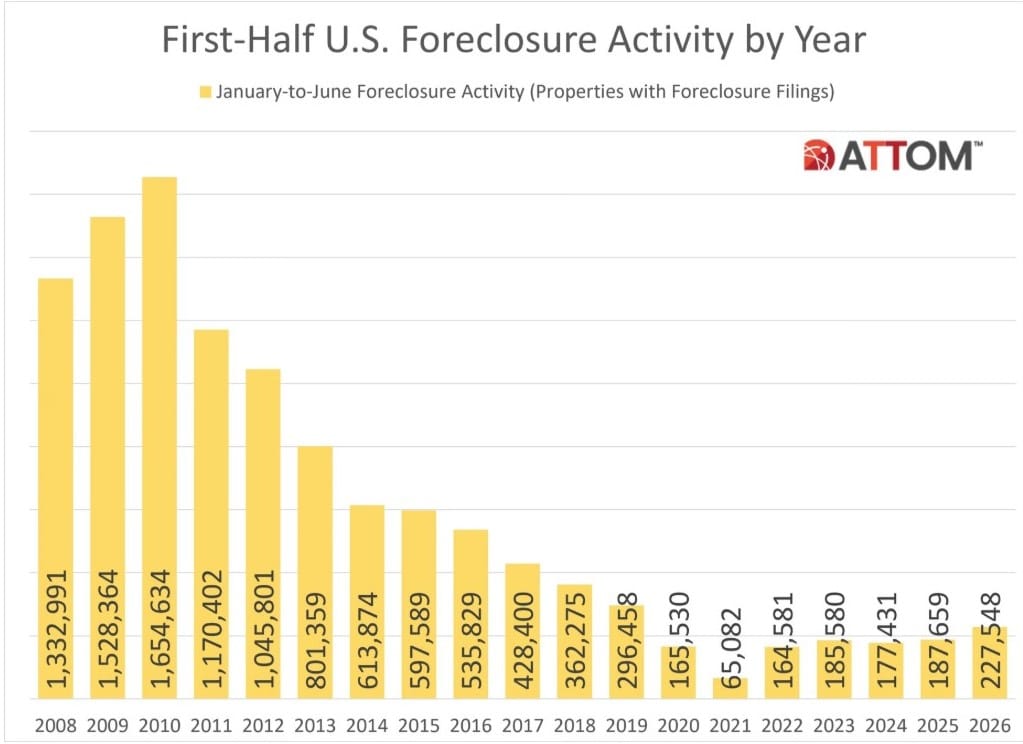
In the first 6 months of 2026, home foreclosure rates rose by 21% when compared to last year. This marks the highest number of foreclosures since the pandemic year of 2021. Translation: signs still point to an uncertain housing market.
But, it’s not all bad news. The 21st Century ROAD to Housing Act turned into a law after bipartisan support. Though we will have to wait before we see any changes, this law will improve affordability by bridging the housing shortage gap and bringing home prices down.
As for housing trends, some of the most affordable inland college towns have turned into real estate hotspots with home prices seeing double-digit growths. Despite this, they still remain some of the most affordable places for first-time homebuyers. On the flip side, the most expensive college towns are seeing a decline in home prices and home sales.
A Redfin analysis found that nearly 1 in 5 Americans are checking out home listings in other metros. The main reasons for this possible migration? Lower rent and home prices, and better lifestyles, yes. But, the most important reason is better weather.
Hemlane Brief
- 6.66%: Average 30-Year Fixed-Rate Mortgage
- 2.6%: Inflation Rate
- 0.4%: Change in Rent MoM
Spring Homebuying Season Ends On a 'Meh' Note
Economic uncertainty due to the renewed tension between the U.S. and Iran and higher-than-ever home prices have been the theme for the U.S. housing market recently. Add in home loan rates that have been hovering around 6.5%, and most aspiring homebuyers have opted to stay put rather than move in on a house.
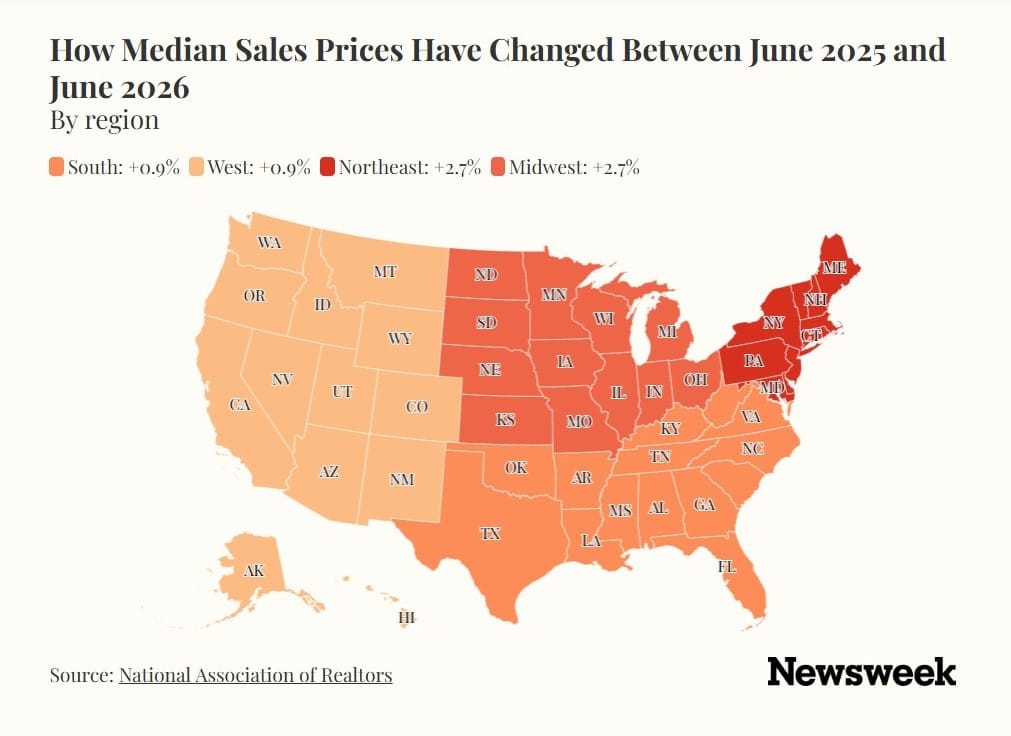
In June, the median U.S. home sales price rose to an all-time high of $440,600, marking a 2.2% year-over-year increase, and we have the wealthy Bay Area and South Florida buyers to thank.
“There’s a pool of higher-income buyers who are purchasing seven-figure homes, but a lot of first-time and average move-up buyers are priced out as mortgage rates stay near 6.5%, making monthly payments challenging,” said Chen Zhao, Redfin’s head of economics research.
Apart from this, rising mortgage prices as well as a skewed buyer-seller ratio have all contributed to a weaker end to the Spring homebuying season. Home sellers outnumbered homebuyers by nearly half a million (48.5%).
In such a strong buyer’s market, you would expect slashed prices and ever-increasing home sales. But, rising prices kept interest among buyers lukewarm. First-time homebuyers only made up 33% of all sales in June, which was a decrease from the 35% of the previous month. This cascaded into a dip in new home listings as would-be sellers also began pulling out.
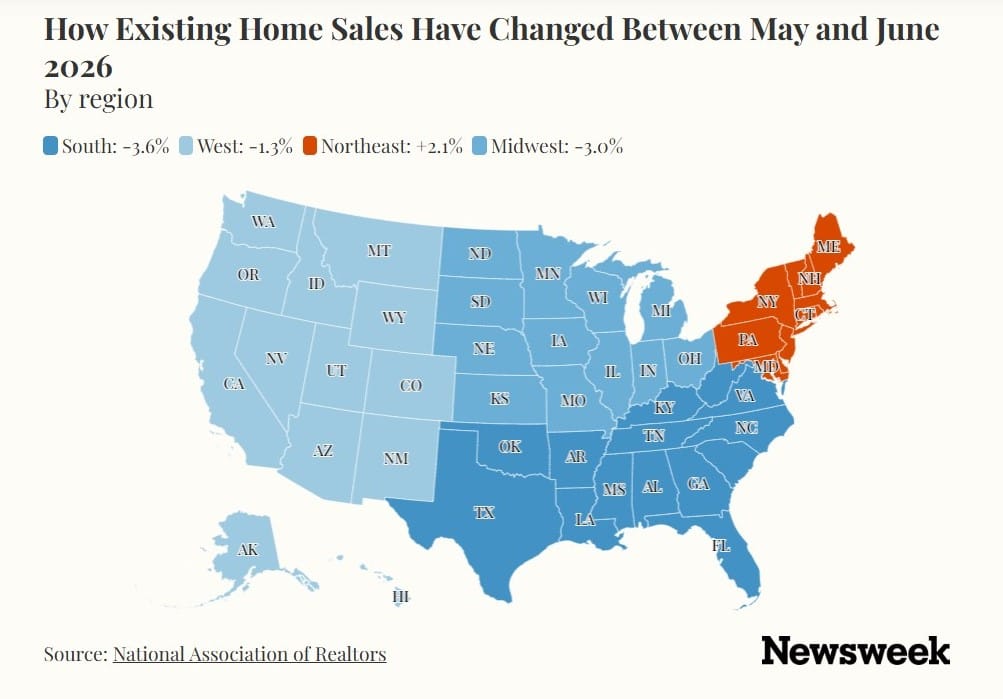
Apart from the Northeast, existing home sales fell in all other regions across the U.S.
If this trend continues, inventory will further stall, leading to a worsening housing crisis.
Foreclosures Rise by 21% Year Over Year
A report from ATTOM, the real estate data and analytics provider, found that the number of foreclosures in the U.S. went up by 21% in the first half of 2026. More than 227,000 homes had foreclosure filings, which have been some of the highest numbers we’ve seen since the pandemic.
Here are the worst foreclosure states, along with the percentage of homes that are being repossessed:
- Florida: 0.27%
- South Caroline: 0.26%
- Indiana: 0.25%
- Delaware: 0.25%
- Illinois: 0.23%
But, panic not. While these numbers are high, they’ve got nothing on the rates we saw during the Great Recession.


Affordable, Inland College Towns are the New Real Estate Hotspots
College towns located in affordable, inland cities have done a complete 180 on national trends and are seeing massive home price growth, often in the double digits in year over year climbs. The prices here are increasing more than 5x faster than the 2% national average home growth price from May.
This data is from a Redfin analysis of MLS data, where a college town is defined as a city where at least 10% of the population are college students at a 4-year accredited university. The city must also be at least 30 miles away from a metro area, with a population of more than 1 million people.
The college towns that saw the fastest price growths were:
- Morgantown, West Virginia; 12.9% year over year change in median price
- Syracuse, New York; 12.5%
- Tuscaloosa, Alabama; 10.6%
The least expensive college towns all had median home sale prices that averaged at $200,000, and were mostly located in the South and Midwest. Lower construction costs and an abundance of land in these areas keep home prices within reach for the average American.
Here are the most affordable college towns for first-time homebuyers and college employees looking for a lower-entry threshold into the housing market:
- Dayton, Ohio; Median home sale price - $139,000
- Syracuse, New York; $180,000
- Mount Pleasant, Michigan; $184,000
- Springfield, Missouri; $210,000
- Urbana, Illinois; $230,000
“Many of the college towns with home prices rising the fastest are also among the most affordable places to buy a home right now. That combination is attracting buyers who have been priced out of larger metros, while universities continue to provide a reliable foundation of demand,” Yingqi Xu, Redfin Senior Economist, said.
Expensive college towns, on the other hand, are seeing an end to their limelight as home prices decline. The lack of affordability has turned buyers cautious, which means there are fewer people willing to put up with the exorbitant prices.
Here’s how the 3 most expensive college towns have fared over the last year:
The 21st Century ROAD to Housing Law Will Boost Housing Affordability
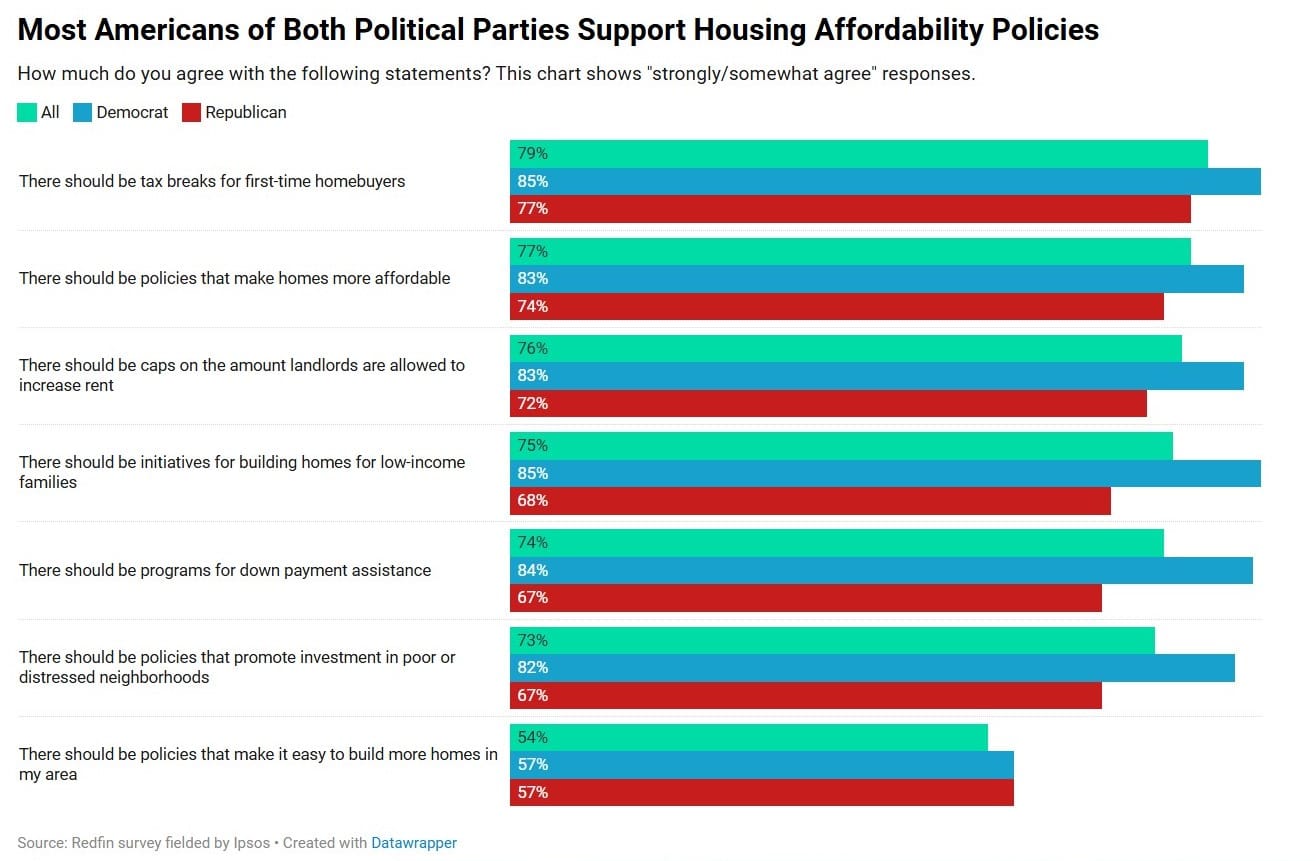
The 21st Century ROAD to Housing Act became law after it was passed by the Senate with bipartisan support. A Redfin survey found that the one thing both Democrats and Republican citizens can agree on is this: a need for more federal policies targeting housing affordability. So, this bill has been a long time coming.
What, exactly, does this housing bill seek to do? Build more houses and lower home prices, making housing more affordable.
Here are the major provisions of the bill:
- Expand housing supply by fast-tracking new construction across the country through incentives and grants
- Limit institutional investors that own more than 350 properties from buying up more single-family homes, making sure the playing field is leveled for individual homebuyers
- Make VA loans for veterans more visible and straightforward
- Make changes to eligibility rules for homelessness
- Provide federal grants and forgivable loans for home repairs
Overall, this law will reshape the housing industry, reducing the burden of homeownership on Americans.
According to Roberto Querica, a city and regional planning professor at the University of North Carolina, U.S. states with the highest costs and lowest supplies will likely see the most impact from this law. These include California, New York, Massachusetts, Nevada, California, Washington, and Oregon.
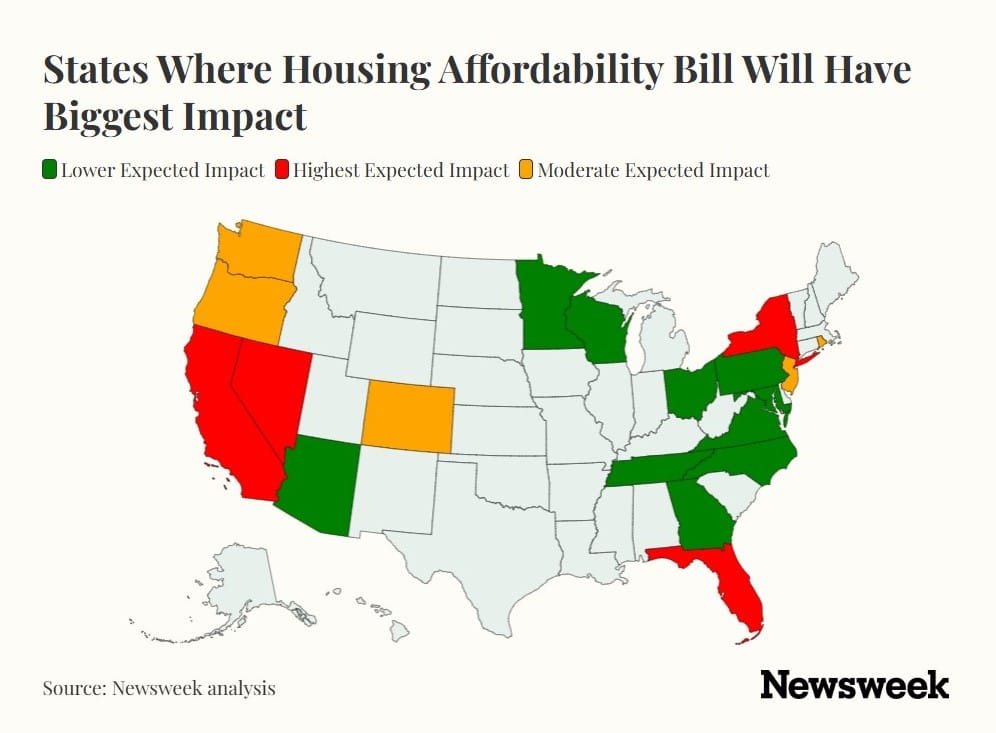
However, the effects will not be immediate as increasing housing supply is bound to take time.
Americans are Relocating, and Affordability’s Not the Main Reason Why
A Redfin analysis found that nearly 1 in 5 (roughly 19.1%) of house hunters are looking to close up shop and move to a different part of the U.S. While this number is only slightly up from that of last year (18.9%), it’s the highest we’ve seen since 2021.
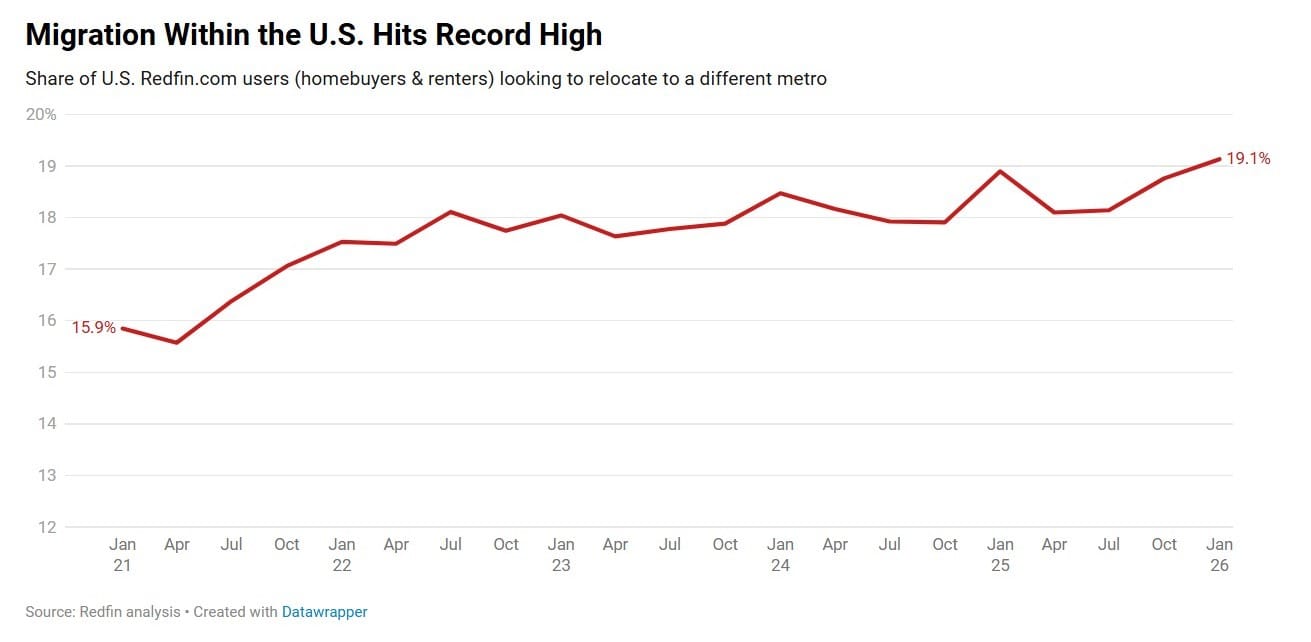
Redfin counts a citizen as a migrant if they view a minimum of 20 homes listed for sale in an area different from their current location.
Affordability is, of course, one of the primary reasons. But, some people are also just moving away from the cities they moved to during the pandemic. Those who work remotely are also relocating to places that are more budget-friendly and provide a better lifestyle.
However, in a different survey, Redfin revealed a different part of the story. Most of the people looking to move states are doing so in search of better weather. In fact, nearly 22% of those planning an out of state move cited better weather as their primary reason, while 21% said they were moving due to climate risk.
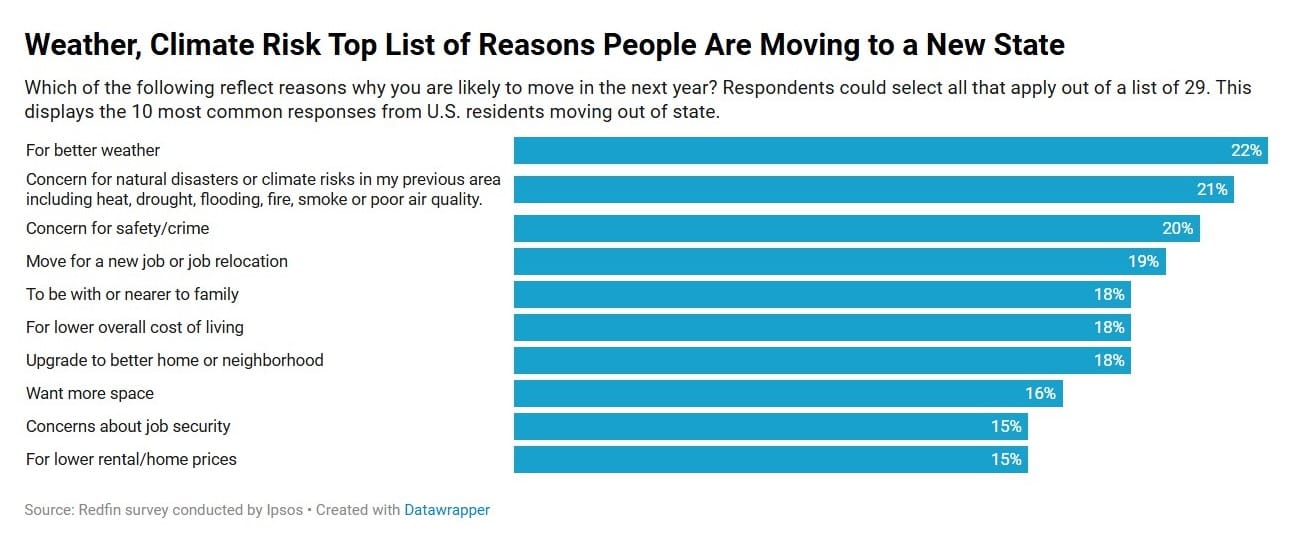


Surprisingly, only 15% of survey respondents said they were moving in search of more affordable rental and home prices.
In both analyses, warm, sunny Florida topped the list of popular destinations for those migrating, followed by Texas and California.
“Many movers are looking for a location that aligns with their ideal lifestyle, and weather can play a meaningful role in that decision,” said Redfin Economist Yingqi Xu. “Whether it’s escaping harsh winters, the desire for year-round outdoor recreation or looking to sunshine as a mood booster, weather is an important consideration for many Americans who are relocating.”
Get the Latest in Real Estate & Property Management!
I consent to receiving news, emails, and related marketing communications. I have read and agree with the privacy policy.


